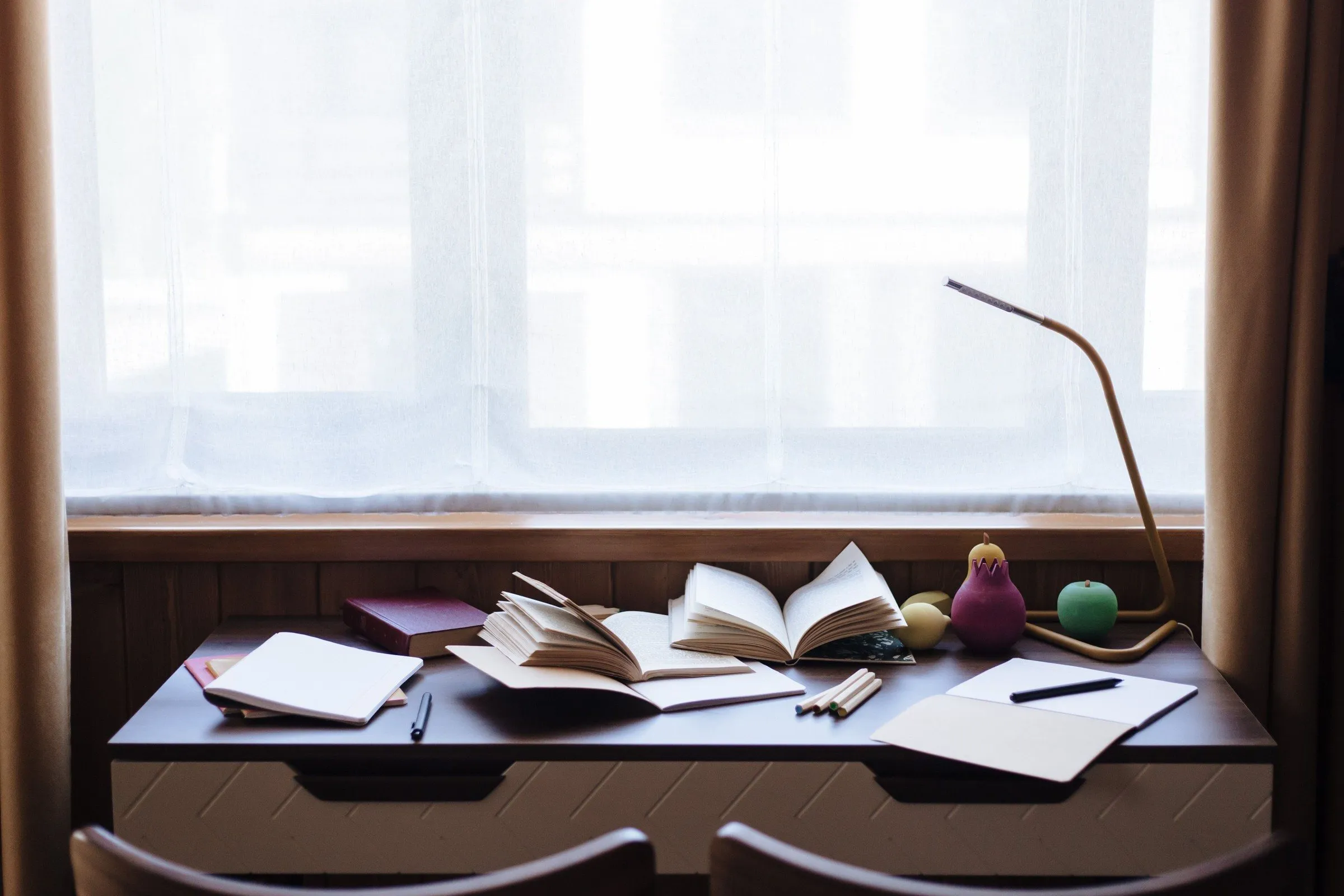
Eleven notebooks, six years, the same format each time: A5, dotted, stitched, black cover. The same format because changing format loses the continuity, and continuity is the only reason to keep them.
This is not a productivity essay. I have no system, no colour code, no index. What I have is a shelf of eleven identical books, and a fairly clear idea of what they are good for and what they are not.
What paper is good at
Speed of capture with no interface. The book is open at the current page, and there is nothing between the thought and the paper except finding a pen. No app to open, no file to name, no decision about where it goes.
Mixed marks. A diagram beside a sentence beside a measurement beside a crossing-out, all on one page, in the order they happened. Every digital tool I have used makes one of those easy and the other three annoying.
And refusing to be searched. This sounds like a defect, and I have come to think it is the main feature.
Reading it back
Because I cannot search the notebook, I have to reread it. When I need something from March, I read March: all of it, in order, including the parts that have nothing to do with what I was looking for.
That is where the notebook earns its place. A search returns what you asked for. Rereading a month returns what you had forgotten you knew, and at least half the essays on this site started as a line I found while looking for something else.1
What paper is bad at
Everything else. It is not backed up, not shareable, and lost if the bag is lost. I have lost one, the second, with four months of work in it, on a train between Belfast and Dublin. Nobody handed it in.
So anything that would hurt to lose gets copied out within the week, into a plain text file that is backed up in three places. The notebook is the first draft of everything and the archive of nothing.
Two things I have stopped doing
Keeping a task list in it. Tasks change state and paper does not. A page of tasks is out of date the day after it is written, and a notebook full of half-crossed-out lists is depressing to reread.
Indexing. For a year I numbered the pages and kept an index at the back, and I consulted it approximately never. What replaced it is a date at the top of every page. If I need something from March, I read March.
That is not a productivity argument. It is a continuity argument, which is a better one: the notebooks are the one record of the last six years that nobody, including me, has tidied.
Footnotes
-
The essay on the measure started as a note in the third notebook that reads, in full, “stop choosing the face first, idiot”. ↩